
When to cut hedges in a typical UK garden
The short answer on when to cut hedges is to plan the main work outside the bird nesting season, which usually runs from March to August. Late autumn and winter suit most deciduous hedges, while evergreens and conifers are best trimmed earlier in the growing year. Across Greater Manchester, November is a good month to book a tidy-up.
This guide explains the nesting season and the law that protects active nests, how to check a hedge before you cut, the right timing for common hedge plants, and what to do if a neighbour's hedge has grown too tall. We also cover safety and clearing away the cuttings, which is all part of our hedge trimming and shaping service.
The bird nesting season and the law
Dense garden hedges offer birds shelter, food and safe places to build nests. The Royal Horticultural Society says the nesting season usually runs from March to August and can last longer, so it is worth being cautious either side of those months. If birds are still active in a hedge outside those months, the safest choice is to wait.
In England and Wales, section 1 of the Wildlife and Countryside Act 1981 makes it an offence to intentionally take, damage or destroy the nest of a wild bird while it is in use or being built. It is also an offence to intentionally kill or injure a wild bird or take or destroy its eggs. There is no blanket ban on trimming a hedge in spring or summer, but cutting through an active nest can break the law.
In practice, that means the hedge cutting season for any serious work sits between September and February. Light trims in summer are still possible for some hedges, provided you have checked carefully first and there are no birds using it.
How to check for nests before cutting
Whatever the month, a quick check before you start is good practice and protects you as well as the birds. It only takes a few minutes and is how we start before trimming any hedge.
- Watch the hedge from a distance for ten minutes or so, looking for birds flying in and out of the same spot, especially with food or nesting material in their beaks.
- Listen for chicks calling from inside the hedge, which is often easier to hear than to see.
- Look gently into the hedge along its length, parting the outer growth carefully rather than pushing in hard.
- If you find an active nest, leave that section alone and come back once the young birds have fledged and the nest is empty.
- If you are unsure, wait. A few more weeks of growth does far less harm than disturbing a nest.
The best time to cut common hedges
Deciding when to cut hedges also depends on the plant and the type of cut. There are two main types. Formative pruning shapes a young hedge in its first couple of years so it fills out well from the base. Maintenance trimming keeps an established hedge tidy and removes most of the previous year's growth. The RHS guide to pruning hedges sets out timings for many popular plants, and the points below follow that advice.
Deciduous hedges
For new deciduous hedges such as hawthorn, beech and hornbeam, formative pruning is done in winter, just after planting and again the next winter. Upright shoots are cut back by about a third to encourage bushy growth. Established beech and hornbeam are usually trimmed once in late summer, but heavier reshaping is best left for the dormant months when the leaves are off and the nesting season is over.
Evergreen hedges
Formal evergreens need more regular attention. Privet and box are trimmed two or three times during the growing season, laurel usually twice, and holly once in late summer. These trims should be planned around the nesting season, with careful checks if any fall between March and August.
Conifers and cutting leylandii
Leylandii grows quickly and needs trimming two or three times a year to stay in shape. The RHS advises pruning it between April and the end of August, and warns that cutting conifers later than that can leave bare patches. The most important rule is not to cut back into old brown wood, because leylandii will not regrow from bare stems. Yew is the main exception among conifers, as it will reshoot from older wood.
Because the leylandii window overlaps with the nesting season, these hedges need a thorough nest check every time. If a conifer hedge has grown far too big, height can be reduced by up to a third in early spring, but a badly overgrown hedge may be better replaced than cut back hard.
Shaping for a healthy hedge
Formal hedges do best when they are wider at the base than at the top. This gentle slope lets light reach the lower branches and stops the bottom of the hedge thinning out over time. A level top and straight sides also help rain run off and make future trims quicker.
Autumn and winter cutting
Once the nesting season has finished and growth has slowed, many hedges can be cut back hard without the risk of disturbing birds. For deciduous hedges, the bare branches make it easier to see the shape and spot any dead or damaged wood. Late autumn is also a sensible time to get a hedge in order before winter storms.
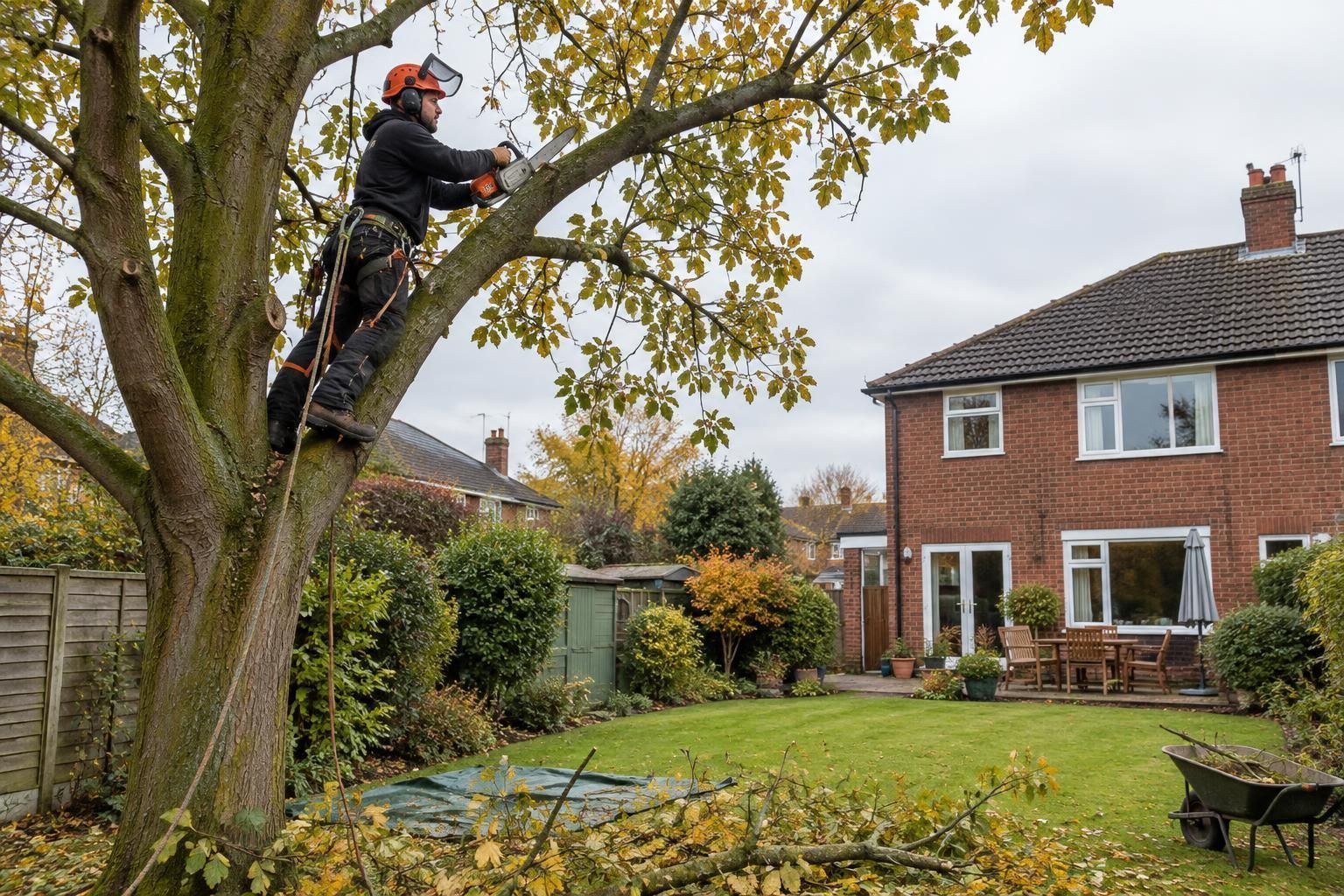
Pick a dry, mild day rather than a frosty or very wet one, and avoid cutting conifers at this time of year, as the RHS notes that trims after August can leave bare patches. With the damp, changeable weather we get in Greater Manchester, it pays to keep an eye on the forecast and book a dry spell. We offer one-off cuts and regular visits, and can advise on the best schedule for your plants. Where a hedge has grown into a row of trees, our tree surgery team can help with reductions and removals.
High hedge disputes with neighbours
If a neighbour's hedge has become so tall that it blocks light and affects your enjoyment of your home, Part 8 of the Anti-social Behaviour Act 2003 allows councils to deal with complaints. According to GOV.UK, a high hedge is a line of two or more mostly evergreen or semi-evergreen trees or shrubs over 2 metres tall. Single trees are not covered.
You are expected to try to sort things out with your neighbour first, and councils usually charge a fee for a complaint. If the council finds in your favour, it can require the hedge to be cut and kept at a set height, but it cannot order the hedge to be removed or cut below 2 metres.
Safety and green waste
Hedge cutting looks simple, but tall hedges bring real risks. Work from a stable platform rather than an overstretched ladder, wear eye protection and gloves, and keep cables well clear of the blades on electric trimmers. Look out for overhead lines and avoid working on wet, slippery ground.
- Check the hedge for nests, wires and hidden fencing before you start.
- Lay sheets along the base to catch clippings and protect lawns and beds.
- Compost soft, small clippings and keep thicker or conifer material separate.
- Plan how the waste will leave the site, as a long hedge produces a lot of bulky material.
Green waste can quickly fill a garden bin several times over. When we trim hedges, green waste removal is included, so you are not left with a pile of cuttings on the drive. If your garden needs more than a trim, our wider landscaping work and the comparison of porcelain and natural stone patio slabs may help with planning the next project.
Planning when to cut hedges this year
Knowing when to cut hedges comes down to three things: avoid disturbing active nests between March and August, match the timing to the type of hedge, and never cut leylandii back into bare brown wood. For most homes in Greater Manchester, the autumn and winter months are a good time to book the heavier work, with lighter trims of evergreens and conifers during the growing season after a careful nest check.
If you would like a hand, OM Paving & Landscaping offers free home surveys and no-obligation quotes for hedge trimming and shaping. Get in touch with our team, call 07555 062750 or email info@ompavingandlandscapingltd.co.uk and we will be happy to help.

When to cut hedges in a typical UK garden
The short answer on when to cut hedges is to plan the main work outside the bird nesting season, which usually runs from March to August. Late autumn and winter suit most deciduous hedges, while evergreens and conifers are best trimmed earlier in the growing year. Across Greater Manchester, November is a good month to book a tidy-up.
This guide explains the nesting season and the law that protects active nests, how to check a hedge before you cut, the right timing for common hedge plants, and what to do if a neighbour's hedge has grown too tall. We also cover safety and clearing away the cuttings, which is all part of our hedge trimming and shaping service.
The bird nesting season and the law
Dense garden hedges offer birds shelter, food and safe places to build nests. The Royal Horticultural Society says the nesting season usually runs from March to August and can last longer, so it is worth being cautious either side of those months. If birds are still active in a hedge outside those months, the safest choice is to wait.
In England and Wales, section 1 of the Wildlife and Countryside Act 1981 makes it an offence to intentionally take, damage or destroy the nest of a wild bird while it is in use or being built. It is also an offence to intentionally kill or injure a wild bird or take or destroy its eggs. There is no blanket ban on trimming a hedge in spring or summer, but cutting through an active nest can break the law.
In practice, that means the hedge cutting season for any serious work sits between September and February. Light trims in summer are still possible for some hedges, provided you have checked carefully first and there are no birds using it.
How to check for nests before cutting
Whatever the month, a quick check before you start is good practice and protects you as well as the birds. It only takes a few minutes and is how we start before trimming any hedge.
- Watch the hedge from a distance for ten minutes or so, looking for birds flying in and out of the same spot, especially with food or nesting material in their beaks.
- Listen for chicks calling from inside the hedge, which is often easier to hear than to see.
- Look gently into the hedge along its length, parting the outer growth carefully rather than pushing in hard.
- If you find an active nest, leave that section alone and come back once the young birds have fledged and the nest is empty.
- If you are unsure, wait. A few more weeks of growth does far less harm than disturbing a nest.
The best time to cut common hedges
Deciding when to cut hedges also depends on the plant and the type of cut. There are two main types. Formative pruning shapes a young hedge in its first couple of years so it fills out well from the base. Maintenance trimming keeps an established hedge tidy and removes most of the previous year's growth. The RHS guide to pruning hedges sets out timings for many popular plants, and the points below follow that advice.
Deciduous hedges
For new deciduous hedges such as hawthorn, beech and hornbeam, formative pruning is done in winter, just after planting and again the next winter. Upright shoots are cut back by about a third to encourage bushy growth. Established beech and hornbeam are usually trimmed once in late summer, but heavier reshaping is best left for the dormant months when the leaves are off and the nesting season is over.
Evergreen hedges
Formal evergreens need more regular attention. Privet and box are trimmed two or three times during the growing season, laurel usually twice, and holly once in late summer. These trims should be planned around the nesting season, with careful checks if any fall between March and August.
Conifers and cutting leylandii
Leylandii grows quickly and needs trimming two or three times a year to stay in shape. The RHS advises pruning it between April and the end of August, and warns that cutting conifers later than that can leave bare patches. The most important rule is not to cut back into old brown wood, because leylandii will not regrow from bare stems. Yew is the main exception among conifers, as it will reshoot from older wood.
Because the leylandii window overlaps with the nesting season, these hedges need a thorough nest check every time. If a conifer hedge has grown far too big, height can be reduced by up to a third in early spring, but a badly overgrown hedge may be better replaced than cut back hard.
Shaping for a healthy hedge
Formal hedges do best when they are wider at the base than at the top. This gentle slope lets light reach the lower branches and stops the bottom of the hedge thinning out over time. A level top and straight sides also help rain run off and make future trims quicker.
Autumn and winter cutting
Once the nesting season has finished and growth has slowed, many hedges can be cut back hard without the risk of disturbing birds. For deciduous hedges, the bare branches make it easier to see the shape and spot any dead or damaged wood. Late autumn is also a sensible time to get a hedge in order before winter storms.
Pick a dry, mild day rather than a frosty or very wet one, and avoid cutting conifers at this time of year, as the RHS notes that trims after August can leave bare patches. With the damp, changeable weather we get in Greater Manchester, it pays to keep an eye on the forecast and book a dry spell. We offer one-off cuts and regular visits, and can advise on the best schedule for your plants. Where a hedge has grown into a row of trees, our tree surgery team can help with reductions and removals.
High hedge disputes with neighbours
If a neighbour's hedge has become so tall that it blocks light and affects your enjoyment of your home, Part 8 of the Anti-social Behaviour Act 2003 allows councils to deal with complaints. According to GOV.UK, a high hedge is a line of two or more mostly evergreen or semi-evergreen trees or shrubs over 2 metres tall. Single trees are not covered.
You are expected to try to sort things out with your neighbour first, and councils usually charge a fee for a complaint. If the council finds in your favour, it can require the hedge to be cut and kept at a set height, but it cannot order the hedge to be removed or cut below 2 metres.
Safety and green waste
Hedge cutting looks simple, but tall hedges bring real risks. Work from a stable platform rather than an overstretched ladder, wear eye protection and gloves, and keep cables well clear of the blades on electric trimmers. Look out for overhead lines and avoid working on wet, slippery ground.
- Check the hedge for nests, wires and hidden fencing before you start.
- Lay sheets along the base to catch clippings and protect lawns and beds.
- Compost soft, small clippings and keep thicker or conifer material separate.
- Plan how the waste will leave the site, as a long hedge produces a lot of bulky material.
Green waste can quickly fill a garden bin several times over. When we trim hedges, green waste removal is included, so you are not left with a pile of cuttings on the drive. If your garden needs more than a trim, our wider landscaping work and the comparison of porcelain and natural stone patio slabs may help with planning the next project.
Planning when to cut hedges this year
Knowing when to cut hedges comes down to three things: avoid disturbing active nests between March and August, match the timing to the type of hedge, and never cut leylandii back into bare brown wood. For most homes in Greater Manchester, the autumn and winter months are a good time to book the heavier work, with lighter trims of evergreens and conifers during the growing season after a careful nest check.
If you would like a hand, OM Paving & Landscaping offers free home surveys and no-obligation quotes for hedge trimming and shaping. Get in touch with our team, call 07555 062750 or email info@ompavingandlandscapingltd.co.uk and we will be happy to help.